Bluegrass Book dev log · Part 8 of 8
2.0 — A Bluegrass Book That Acts Like One
The site just shipped its largest release. Here’s what changed, and why.
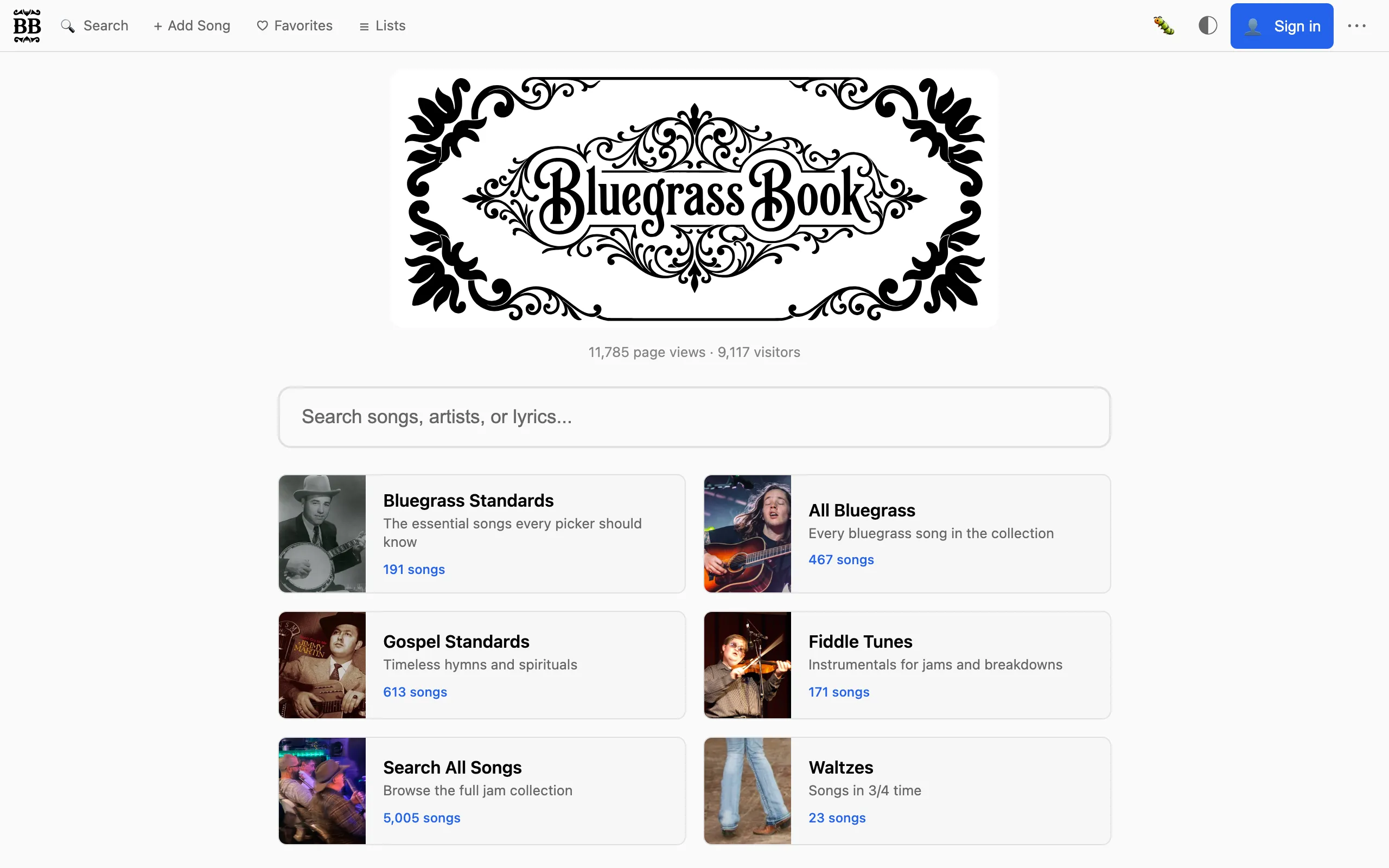
The index is bluegrass now
Keeping the entire imported corpus made search less useful for a site dedicated to bluegrass — a query would surface thousands of classic-country lead sheets, and “House of the Rising Sun” sat in the Bluegrass Standards collection. So I made the call: any song I couldn’t programmatically identify as bluegrass — scored by which bluegrass artists actually recorded it, across how many generations — was dropped from search. That cut the index from 18,204 to about 5,200 songs.
The data was all retained. Direct links and lists still work, and if song requests come in for something that got cut, bringing it back is a one-line change.
One page per song
Songs and “works” used to be two different pages — a lead sheet view and a dashboard of version cards, part cards, and forms. Now there is one page. Lyrics and chords render by default; banjo tabs and fiddle notation are tabs on the same page; alternate versions live behind a small “arrangements” control with voting. Old URLs redirect permanently.
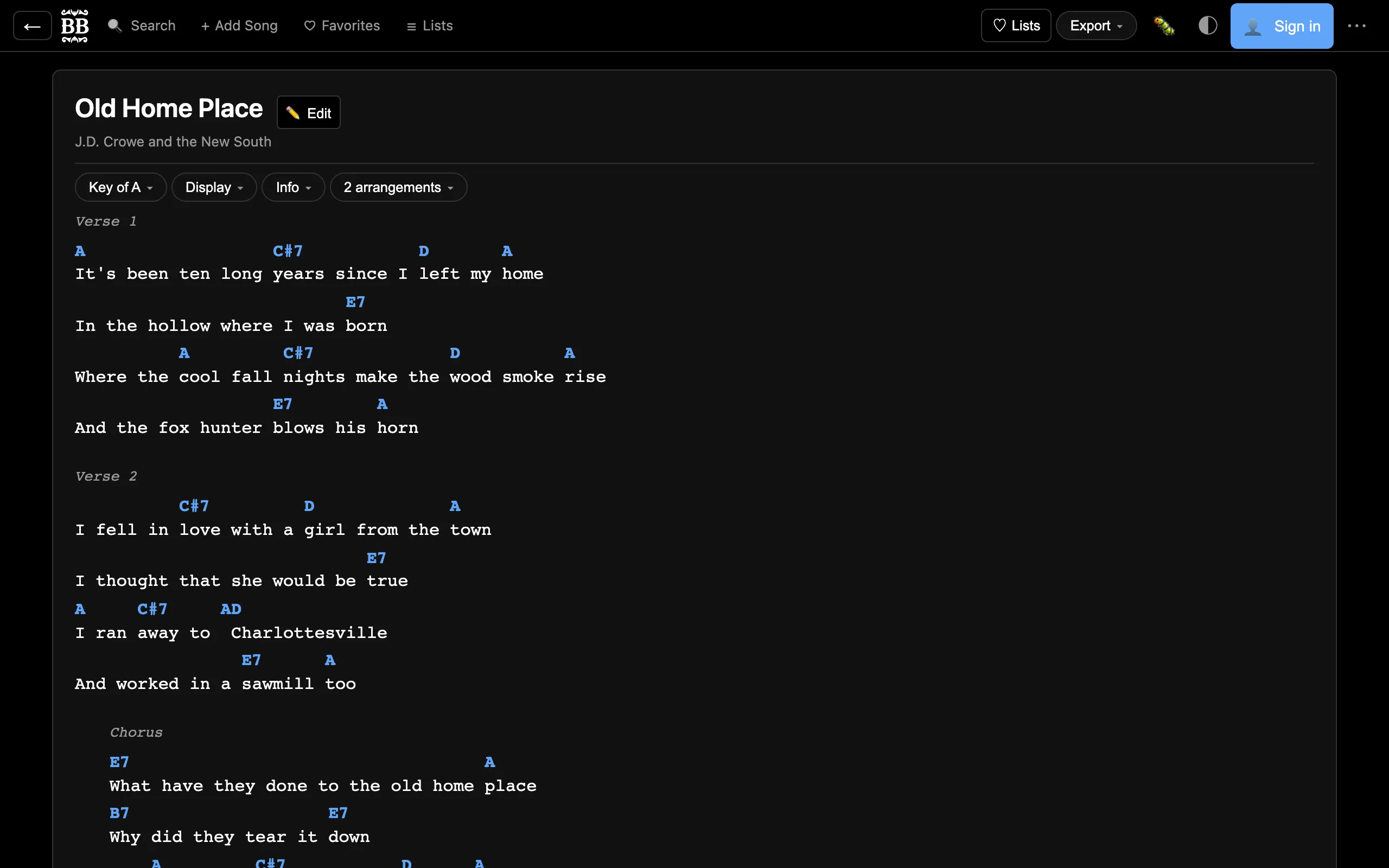
Duplicate versions got real curation. The same song split across two entries — two “Misty”s, two “John Henry”s, three “Wayfaring Stranger”s — now collapses to a single search result with the canonical version in front and the rest one tap away. About two dozen standards were unified this way, with tooling to keep going.
Chrome that gets out of the way
We used to provide too many views of the same content — a works view, a focus view, a print view — and it was confusing. The new design assumes that most people coming here just want to read the music, so everything merged into one view that minimizes decoration and leaves the room to the content: a slim bar on top, controls as small pills under the title, and a transport bar on the bottom when a tab is playing. Scroll into a song and even the top bar slides away; on a phone, the sheet runs edge to edge.
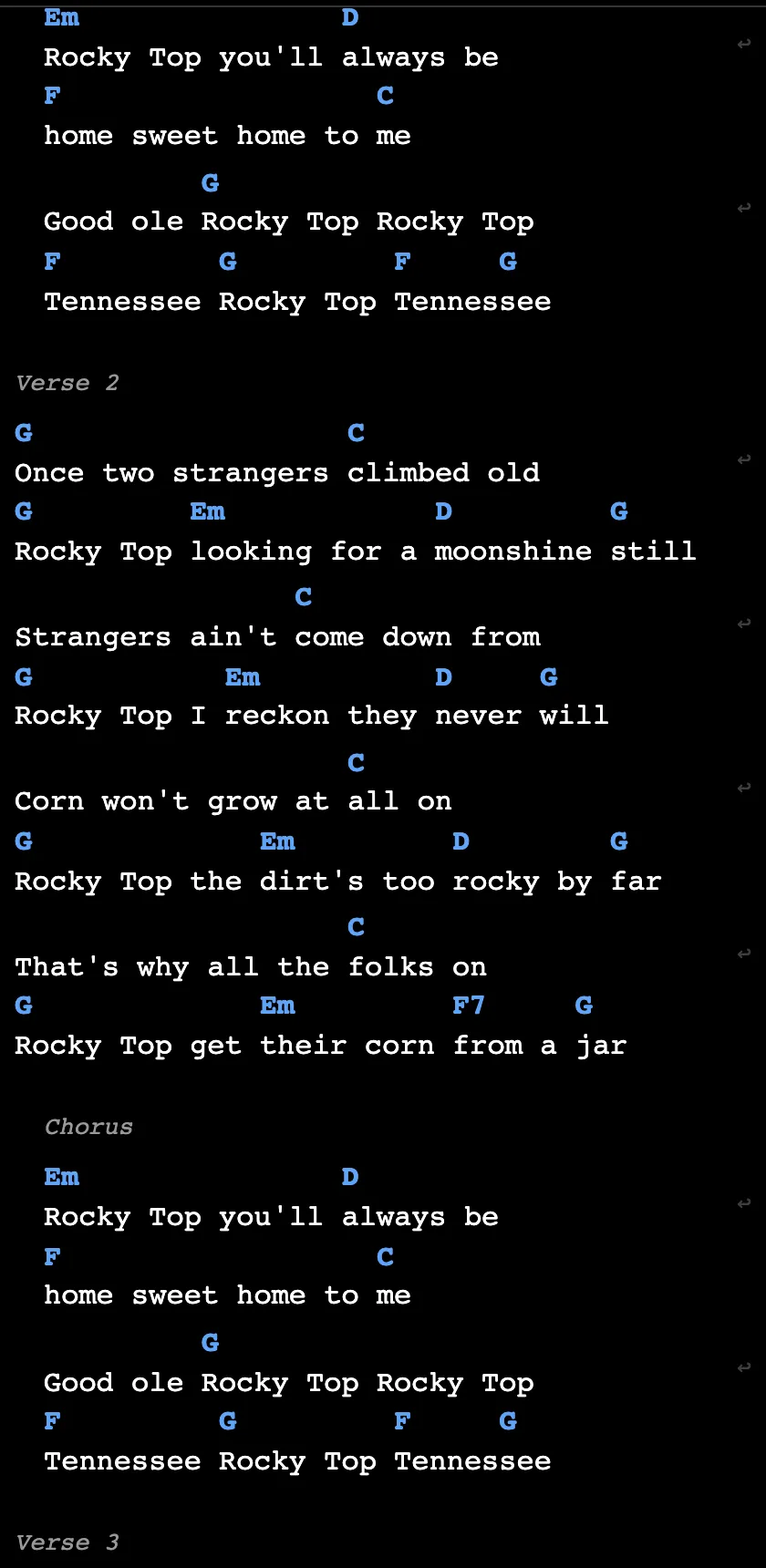
The bounty board knows what’s missing
The same recording-graph analysis that pruned the index also produced a map of what the book should have and doesn’t: 515 canonical jam songs, led by 82 core standards — Cumberland Gap, Katy Hill, Rawhide, Bill Cheatham. The bounty board now lists all of them, plus two gaps computed from the index itself: 165 tunes that exist but lack banjo, mandolin, or guitar tabs (the whole corpus has 51 banjo tabs, one mandolin tab, and zero guitar tabs — help), and ~100 songs with words but no chords. Tap any of them to contribute; the form comes prefilled.
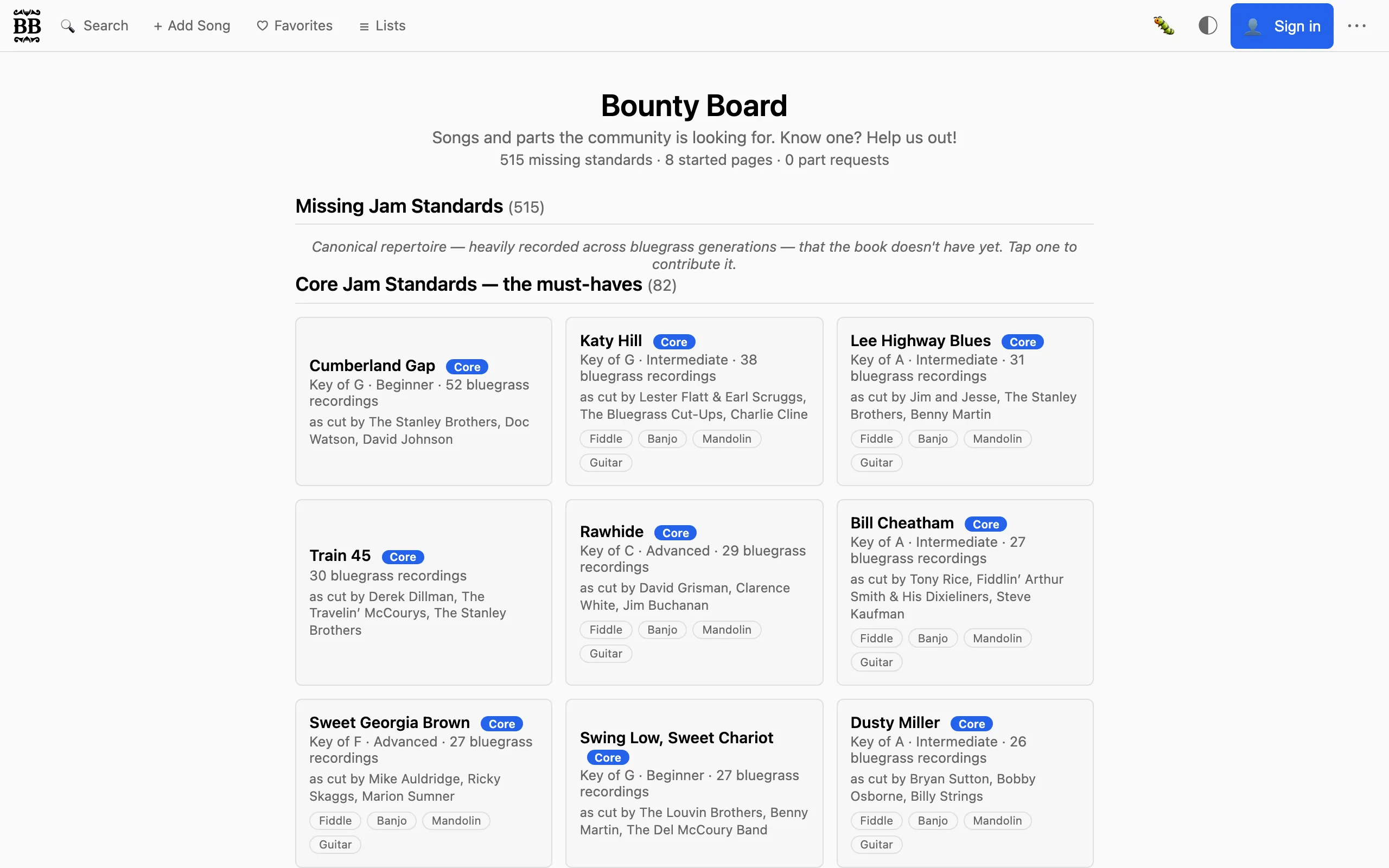
Tablature: a TablEdit for the browser
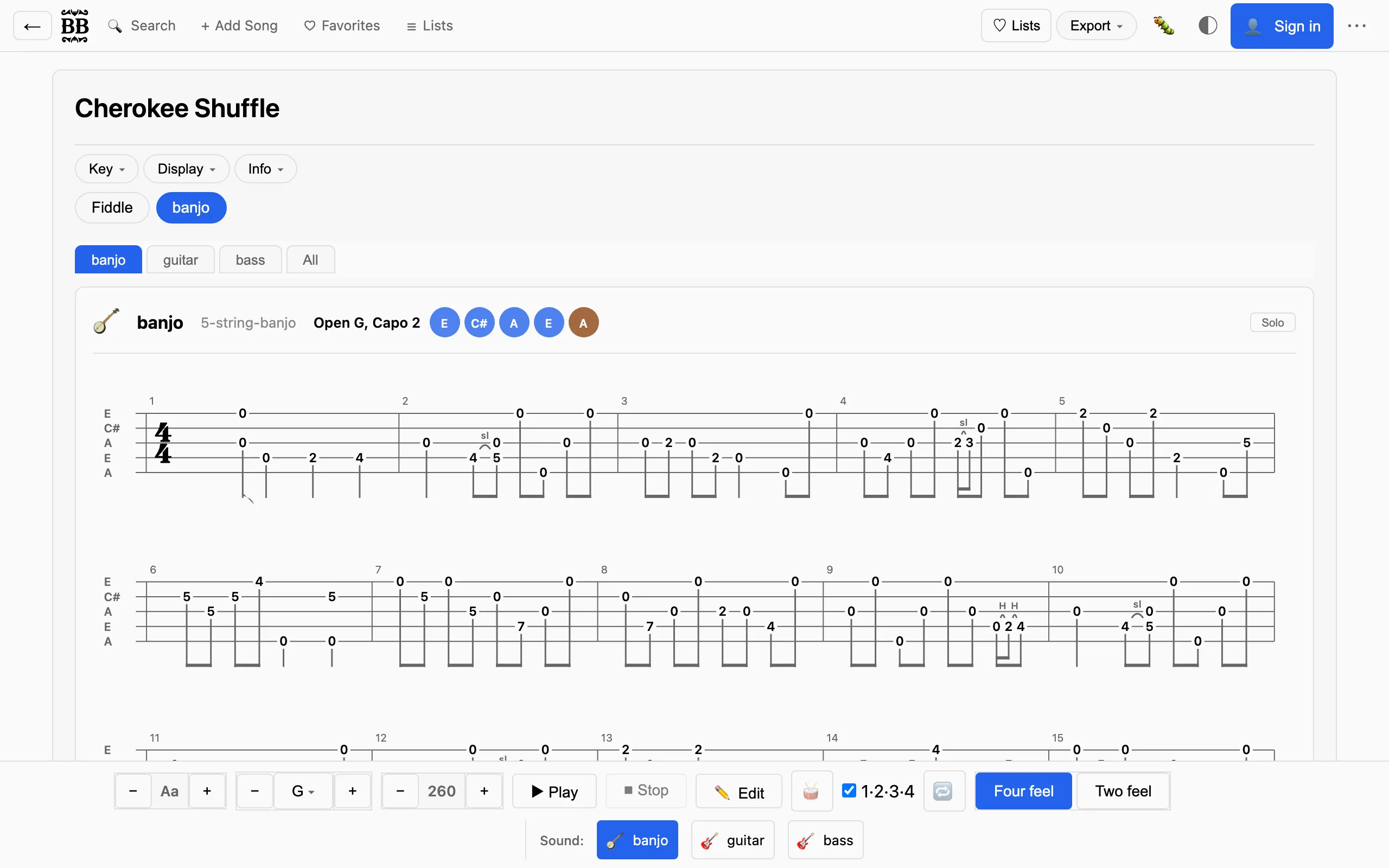
This one deserves its own headline. The tab system is no longer just a viewer — the goal is TablEdit compatibility for bluegrass multipart tabs, in the browser, no software to install:
- Import your
.teffiles directly. Drop a TablEdit file on the site and it’s parsed entirely in your browser — all the tracks, tunings, capos, and repeats — then opens in the editor, ready to review and submit. - Multipart playback. Imported arrangements with banjo, guitar, mandolin, and bass play together, with a track mixer to bring parts in and out, solo buttons, looping, count-in, a metronome, and tempo control.
- Faithful rendering. Text annotations, fingerings, section names, repeat brackets and voltas, and TablEdit-style bends — played back as the quarter-tone chokes they are.
- Edit in the browser. Every tab on the site has an Edit button: fix a note, change a fingering, adjust a roll, and download the corrected tab.
You can also build multipart tabs from scratch — pick any mix of banjo, guitar, mandolin, bass, tenor banjo, and dobro on the create page and switch between tracks as you write. Honest print: the submit-a-correction pipeline for tab edits is built but not yet switched on. If you’ve got a folder of TablEdit files from years of collecting, that’s the invitation.
Rough edges, and what’s next
Being honest about where this stands:
- Everything is git-driven under the hood. Contributions, corrections, and tab submissions all flow through GitHub pull requests and issues. That keeps every change reviewable and the whole songbook versioned — but it’s not user-friendly, and most pickers shouldn’t have to know what a PR is. Smoothing that path is the next big piece of work.
- Writing tablature fast is unsolved. The editor works, but bluegrass has idioms — rolls, common licks, backup patterns — that deserve first-class ergonomics, not note-by-note entry. That needs more design thought before more code.
- The corpus needs filling out. 515 canonical songs are still missing, the instrumental repertoire barely has tabs beyond banjo, and a hundred songs are waiting on chords. The bounty board is the map; now it needs hands.
Thanks
None of this exists without the people who said yes: BluegrassLyrics.com, Classic Country Song Lyrics, and the Golden Standard collection all gave permission for their content to live on here. Banjo tabs link back to their original sources and authors on every page.
Since January, in numbers
- 764 songs imported from BluegrassLyrics.com, 494 with chords recovered by matching against Ultimate Guitar
- 18,204 → ~5,200 searchable songs; 236 → 194 Bluegrass Standards
- 515 missing standards catalogued and wanted
- Five views, one modal system, and roughly 3,000 net lines of code deleted
- 1,325 unit tests and 283 browser tests now guard all of it
The feedback button is in the top bar — the bug with the little bug on it. Use it.